Beyond Four Walls: What Remains?
By Soha Bassam Mohammad G E Kassab, Lily Simpson and Imogen Sykes
Edited by Naomi Adam
Following the release of The Letters Page Volume 5, members of the Web and Production teams take a closer look at some of the letters that made it to print. Their reflections offer a sneak peek at the pieces included in the new edition and the wide-ranging themes explored. Today, the Production team turn to a letter from Tartu by Tõnis Vilu, translated by Jayde Will, which offers a sentimental and thoughtful reflection on identity and the individual and evolving meaning of home.
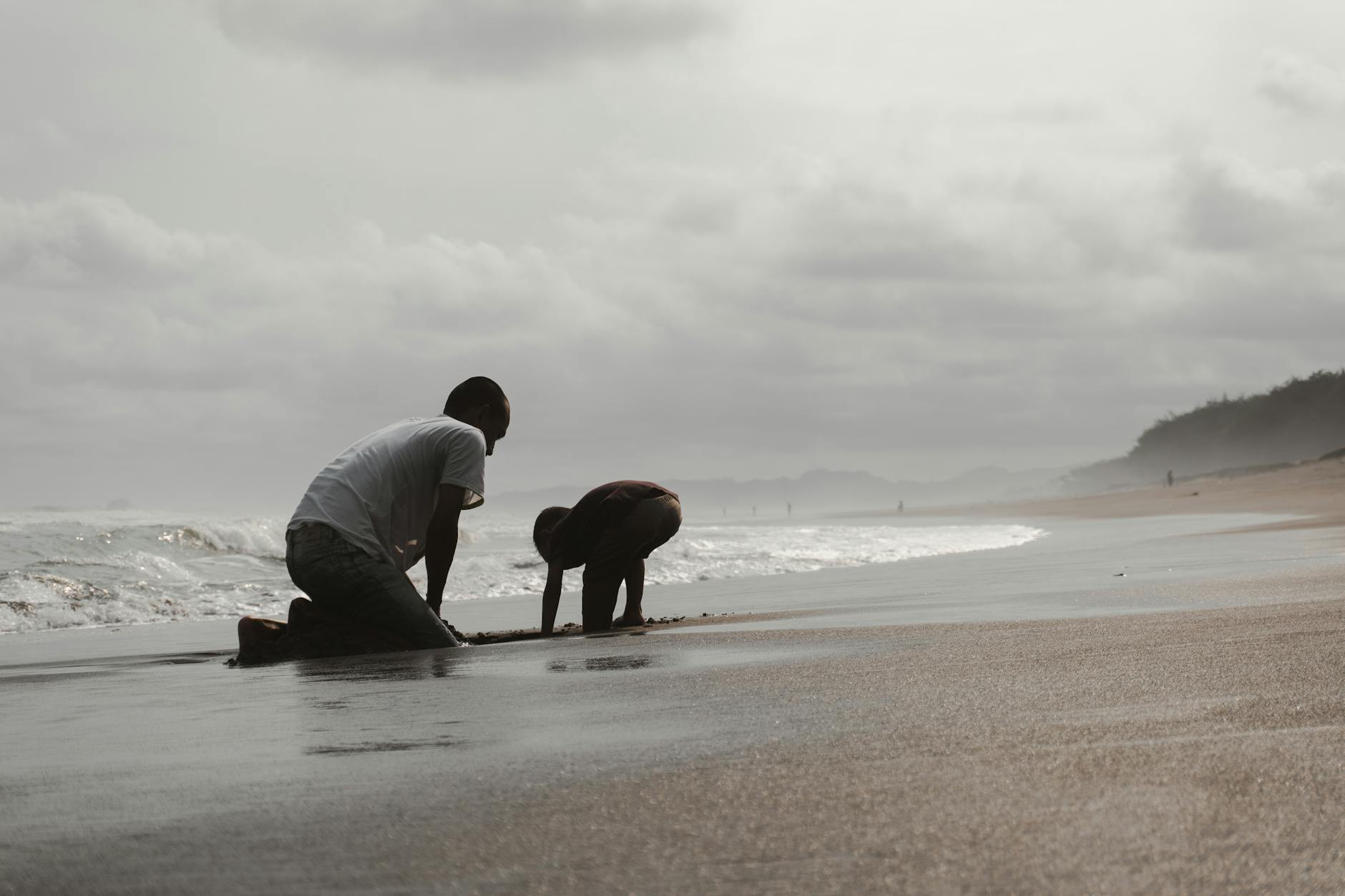
The idea of home is far from universal. You might think of four walls, a roof, and the familiar comfort of our own beds. Your neighbour might think of his mother’s soup when he is sick; your colleague might picture his church on a Sunday morning; a new friend might silently think of her faraway house by the coast in a country she hasn’t returned to since childhood. The only common thread is the unspoken sentimentality attached to the idea of home. Home is less a place than a feeling, one in which Estonian poet Tõnis Vilu captures deftly in his letter as he reflects upon the relationships in his life, particularly with his father, and how they have shaped his understanding of what home means to him.
A Home in Childhood
When discussing home through the lens of childhood, it is easy to allow nostalgia to creep in and soften the edges of our memories. In his letter, Vilu resists this urge and instead depicts home as something that shifts over time, quietly reshaping itself under our noses as we mature, and our lives and relationships change. What was once constant, an anchor of our identity, is now a reminder of the past. It outlives a physical presence, becoming a theatre of memories, a time capsule ready to be unleashed. In his personal account, Vilu explores how home changes between childhood and adulthood. As a child, his seaside home was the backdrop to summer, somewhere he could close ‘himself up in the silence of his room’, untouched by responsibility and reflection. Home was a space for naivety and blissful ignorance, somewhere that seemed to exist purely for him. Yet this sense of consistency begins to shift in adulthood.
With the maturity and experience of adulthood, the house no longer exists simply as a fixed point of memory. Instead, it’s a symbolic site of family and home that Vilu describes as ‘inherited’ and strange, as ‘suddenly we are the ones responsible for the house.’ In essence, he swaps places with his father, and his childhood home takes on a new meaning that he is uncertain he can manage. He is caught between the roles of the authority that comes with ownership and the innocence and invisibility of his childhood memories. Vilu demonstrates how home is so deeply intertwined with our identity that when confronted with its physical reality, it can feel strange and uncanny, as if it’s something that cannot be merely described, only felt.
– Lily Simpson
A Home in Faith
Vilu’s uncanny experience is an understandable reaction to a house that is no longer a home. As we grow up and out of childhood, home extends beyond what our parents provided us; we are tasked with laying down our own foundations, searching for somewhere or something to sustain us.
Religion, for many, seems capable of housing this feeling of home, as it surely did for Vilu’s father. Vilu writes of his father’s Omnist beliefs, of how he put his faith in almost anything from Buddhism to Paganism. Vilu’s father sought to instil these beliefs in his children – an attempt, perhaps, to show the different forms home can take, to equip his children with foundations that outlast the house of one’s childhood. Yet, just like home, faith cannot be understood through explanation or description: it has to be felt, experienced. This was missing for Vilu. The sacred places that offered ‘something more’ to his father were to him simply spaces for quiet reflection. Unable to share this home in faith and religion, Vilu sat uncertainly with the label of agnostic.
That is, until his recent interest in spiritualism – the belief in a spiritual realm which can be interacted with. Vilu relates feeling a ‘pull towards matters of the soul’, expressing that inexplicable nature of faith – an intrinsic, inherent, yet incomprehensible connectivity. He writes:
‘I’ve sometimes felt something strange, that I am unable to explain. I understand instinctively what a soul is, I feel it, but that tenuous concept threatens to fall apart at any moment.’
Vilu outlines a fragility in faith that arises when one tries to envisage it. Home arguably works the same way, as a concept that evades our conscious understanding: it takes many forms (like faith) that we can only ever feel, never force.
– Imogen Sykes
A Home Displaced
From my experience as a person who grew up away from my motherland, then moved yet again to a third country for my studies, the sense of displacement snuck up on me over the years as a slow misalignment. I feel it when I visit my hometown and have to use Google Maps to get everywhere. I also feel it when I write things like ‘I visit my hometown’. That sentence alone carries a softened type of ache because it’s a reminder that I did, I do, and I always will belong to places that no longer know how to hold me. Identity and belonging weren’t presented to me as fixed possessions or established assets, but rather as an accumulation of temporary residence. I think my body knew, way before my mind did, that I was being shaped by every place I’ve been to, but that these places would nevertheless remain unstable –subject to time, family, tradition, politics, and, most prominently, absence. What is most formative about places is also what cannot be preserved.
Tõnis Vilu captures that uncertainty that comes with ownership without inhabitation, writing: ‘I am introduced as the owner of the place, though I find myself there rather rarely.’ In this line lies a subtle paradox. To own a place is to be associated with it, yet to visit it infrequently is to grasp the familiarity from a distance. Displacement, in its most dramatic form, can feel like exile. However, it also applies to the more intimate type of alienation and estrangement: the ‘self’ outgrowing the conditions that once defined it. The homes remain, but the versions of the self that belonged to them have dissolved.
This is where displacement doubles down on its own paradox. Place – where you were brought up, where you belong, and where you always find yourself going back to – is often considered the most tangible pillar of identity. Yet it is also the most prone to change. After all, houses get inherited and sold, borders redraw themselves, and memory alters whatever remains. Those places that once anchored us begin to drag, and we must steady ourselves without severing the rope. What emerges from all of that is multiplicity; versions of the self-tethered to different places, never fully assembled or wholly present at once.
– Soha Kassab
What does home look like to you? The Letters Page team are back in the office, and ready to read your real letters again. We publish stories, essays, poems, memoir, reportage, criticism, recipes, travelogues, and any hybrid forms, so long as they come to us in the form of a letter. We are looking for writers of all nationalities and ages, both established and emerging.
Your letter must be sent in the post, to:
The Letters Page, School of English, University of Nottingham, NG7 2RD, UK
See our submissions page for more information.
Need some inspiration in your letter-writing endeavours? You can purchase our latest collection, The Letters Page, Vol. 5, by clicking here.
 theletters.page