Autofiction: The Letter Writing of Our Time?
By Carolien Wielockx
Edited by Annabel Wearring-Smith
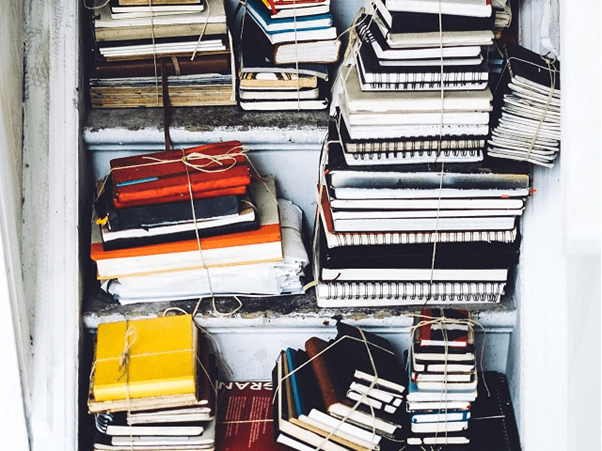
Photo credit: Torch
In an arrestingly tender letter to her brother, Martha O’Brien asks several insightful questions about the role of grief and the impact it has on both private and public communication. She wonders whether the way she and her brother Kieran have corresponded recently ‘is a bit like those broadsheets’, which seem only ever to report on ‘the world’s disasters’, a comment Kieran made while listening to the news on the car radio. Somehow joy doesn’t seem to be as newsworthy as tragedy; she decides that moments of simple beauty do matter and that she will make a point of shifting her attention to them in her future conversations. Her thinking about what we ultimately have to say to one another doesn’t stop there; as she and her siblings know all too well what grief can do to their lives, she contemplates the question of what it can do for them instead.
At the time of reading her letter, I was also reading Sheila Heti’s 2018 novel Motherhood. Martha’s questioning of the agency of grief reminded me of something Heti wrote, that ‘only in the pursuit of failure can a person really be free’, and, if one accepts this as a premise, could it be that ‘our wrestling will take care of us forever’? This struck me as a beautiful way of thinking about grief, as it turns the tables on its enduring power: maybe a more rewarding concept of grief is to think of it not as something that ensnares us, but rather functions as a long-term companion who challenges our thoughts and beliefs as we move through difficult periods of our lives. As Martha points out, this is not a romanticising of grief, a rhetoric akin to the old biblical idea that we have been put on earth to suffer, and that only through our suffering we’ll find redemption. Yet having done the hard work of grieving, Martha knows that ‘the view from the top of both Skirrids is better than it would’ve been before’. What I think O’Brien as well as Heti are suggesting is that grief is capable of taking care of us in diverse and often contradictory ways, at once hurtful and nurturing.
Asking the question of what is newsworthy naturally lends itself to the question of what is worthy of storytelling. I started wondering if autofiction with its focus on innermost thoughts and feelings might be to some extent the new letter writing of contemporary authors, such as Sheila Heti and Rachel Cusk. Does the genre, knowingly or otherwise, replace the lost intimacy of letter writing?
An oft-heard complaint about autofiction is that it doesn’t have any subject matter beyond the author’s navel-gazing: a mere staring into the abyss of one’s most personal thoughts and ongoing anxieties. This reproach is mostly made by male writers and reviewers, who are quick to denounce the writing by said authors as a “women’s genre”. It is ironic, then, that Norwegian author Karl Ove Knausgaard was internationally lauded by the male dominated literary market as a ‘real writer’ for his unsparing, 6000-pages hyperdetailed account of domestic life in My Struggle, after which he became a literary persona larger than life. Rachel Cusk, on the other hand, was subjected to the blackest vitriol for her account of motherhood in her memoir A Life’s Work. The question of what a “real” writer is seems a predominantly ideological one, starting from preconceived notions of the meaning of “real” – a qualification inherently subjective. It doesn’t strike me as a very interesting question either. What does, however, is the question Martha formulates so alarmingly in her letter: ‘How often do we echo the car radio, seeing only the spectacle of misery as worthy of storytelling?’ It seems that over the centuries, male authored literatures have privileged “grand narratives” as those that are worthy of being told, at least in Western literary history. This attitude still dominates our ideas about what writing is and should be. Seeing that here at The Letters Page we are championing letter writing in all its diverse forms, the important question to us is what writing can be.
One possible answer might be found by looking at the privileged status of letter writing throughout literary history. Nineteenth-century authors used to write letters on a daily basis, often performatively, anticipating their future publication. These letters were part and parcel of Victorian sociability, yet no respectable literary critic would dream of dismissing Lord Byron’s letters today as mere navel-gazing – a fate still largely reserved for women’s “personal” writing today.
In a 1966 article in The Atlantic, ‘I Am, Yours & C. The Art of Writing Letters’, critic L. Kronenberger maintains that ‘with [letter writing], as with other minor arts – gardening, decor, cookery – though women in general are better, men on the whole are best’. Going by modern-day reviews of women’s autofiction, the world has not changed that much. Despite his misogyny, Kronenberger does illuminate: ‘how letter-writers should be classified and ranked means far less than how diversified and rewarding, in subject matter, tone, and appeal, are good letters themselves. Thus, there are the letters that may be said to lack subject matter – by no means the least talented’. In other words, the best letters don’t necessarily have a grand subject, but touch their receivers with their intimacy of tone, their delicate musings, and often their urgency to ‘relish in the simplicity of things’ – as Martha has it.
Perhaps this is a question for the ever-dwindling community of letter receivers of the world: can autofiction, like letter writing in bygone days, ‘fill the gaps in the silences where once pain was’? Those silences created by the loss of letter writing that all the noise of instant messaging has not been able to fill? And if so, what does that mean for autofiction’s allegedly inferior literary status?
The Letters Page team are back in the office, and ready to read your real letters again. We publish stories, essays, poems, memoir, reportage, criticism, recipes, travelogue, and any hybrid forms, so long as they come to us in the form of a letter. We are looking for writers of all nationalities and ages, both established and emerging.
Your letter must be sent in the post, to :
The Letters Page, School of English, University of Nottingham, NG7 2RD, UK.
See our submissions page for more information.
To stay up to date on The Letters Page newsletter publication, subscribe here.
 theletters.page