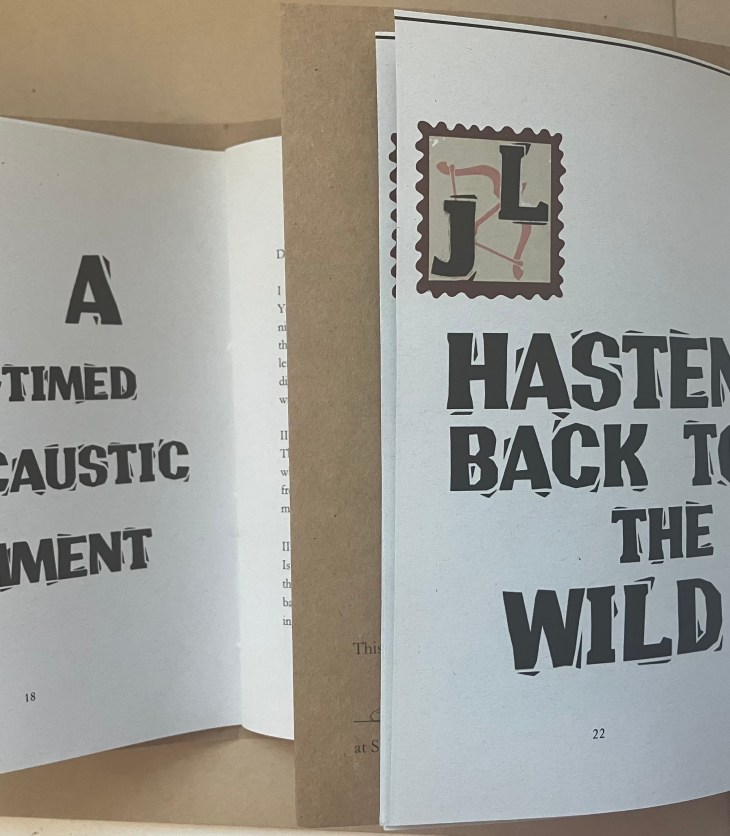
Continuing our series tracing the threads that bind the letters of The Letters Page, Volume 6 together, here we delve into letters 3 and 4 from Claire Miller and B. Lawrence. One looks towards a possible future, the other towards a fading present, yet both are shaped by uncertainty.
Category: Uncategorized
With the release of The Letters Page, Volume 6, we take a deep dive into the letters it features and what you can expect from this latest volume. We start at the beginning, with letters 1 and 2 from Jennifer McCormack and Jason Low.
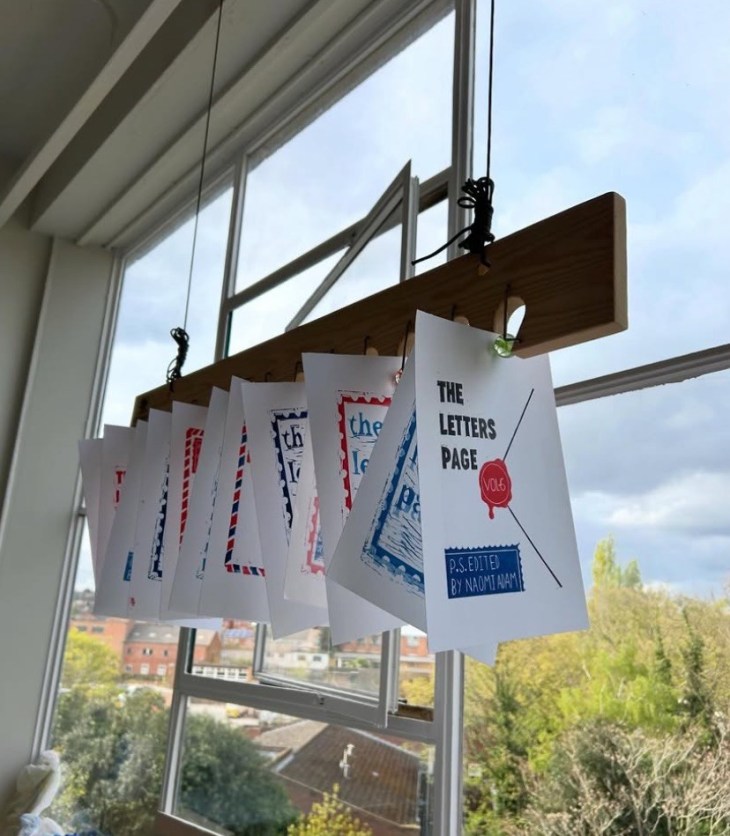
With production for the sixth volume of The Letters Page finished, we take a look back at some of the processes that have brought us this far, delving into the process behind the design and creation of the hand-printed cover art for this unique new issue.
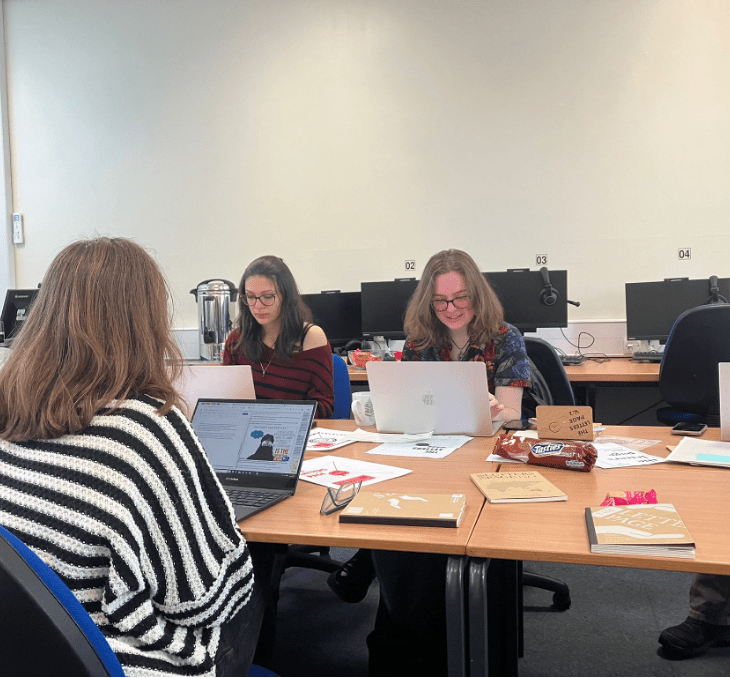
With the release of The Letters Page, Vol. 6 rapidly approaching (mark your calendars for this Friday), we started this week of producing the limited 100 copies with a day of editing and arranging our 8 chosen letters.
Translation is at the heart of our recent collaboration with UNESCO Cities of Literature, The Letters Page, Vol. 5. To celebrate the involvement of the nine incredible translators who worked with us on this project, this week we spoke to Olivia Hellewell, translator of Manca Renko’s letter from Slovenia’s capital Ljubljana, about her thoughts on and experiences with translation.
‘Editing between us is lovingly done and always with the reader in mind. The shared responsibility makes us more attentive’, reveals The Letter Page’s Web Editor Elodie Edwards. Her fellow Web team member Zoe Lidbury agrees, noting how ‘through shared authorship comes new perspectives, stronger writing, and a great capacity for compromise’.
At The Letters Page, we believe that Christmas cards are so much more than sentiment: they are imbued with meaning through their simple physicality and personal touches. We think that the impersonal buzz of an electronic notification shouldn’t be allowed to replace the rattle of the letterbox and the satisfying thud of Christmas post on the doormat.
Laura and Irene both speak of their personal relationship with letter writing. Laura is apt to send letters to whoever on her Facebook friends list wants one, while Irene sends long digital letters in the form of emails to a friend in New York. In a beautiful analogy, Laura then compares letter writing to kintsugi.
Cities, like letters, are layered; they’re contradictory and defined by presence and absence working simultaneously. Marius Burokas’ Vilnius-inspired letter serves as a reminder that both cities and the self remain open – they’re unfixed and contain the ability to be superimposed, but yet never erased.
The myth of Robin Hood has travelled far beyond its own home forest. Outside Prague’s main train station lies Vrchlického Sady, known by locals as Sherwood. This urban park doesn’t hold the legendary history of heroism that permeates Nottingham’s popular forest, but rather incorporates through literature the darker aspects of Prague’s culture.