‘Steeped in Uncertainty’: A Look at Letters 1 and 2 of Volume 6
By Lottie Wright
Edited by Naomi Adam
With the release of The Letters Page, Volume 6, we take a deep dive into the letters it features and what you can expect from this latest volume.
After Volume 5 (which is still available for purchase), The Letters Page decided to return to our roots. There was no theme for our sixth volume, just an open call for letters from everyone and everywhere. Our submissions came from countries as disparate as Hong Kong, Trinidad and Tobago, and New Zealand. However, in choosing from the many wonderful and interesting submissions we received, some clear themes emerged. The letters we chose serendipitously connected themselves together, creating a weaving pathway for the volume to follow.
This volume is many things, but in particular, it is uncertain. Uncertainty colours several of the letters – uncertainty about the future, about what choices to make, about whether or not the letter an author is writing will even be received. It feels appropriate for the times we’re currently living in, where the world and our collective future feels so unpredictable.
Altogether, this is a collection that seeks to get to the core of letter-writing, and what it means to write a letter that might never be read, but just sent off into the ether. It also touches on nature, on art, on change and decline, on conflict, and on escape.
In this series of articles, we take a look through the letters of Volume 6, two at a time, discussing them individually then considering how they link together.
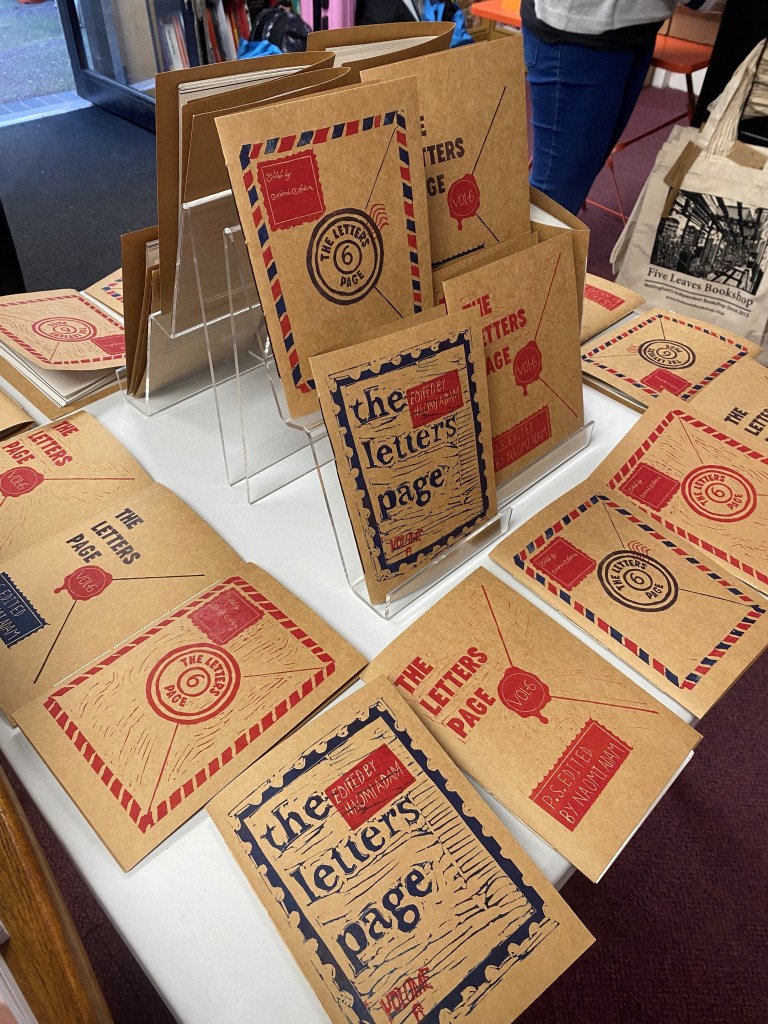
We start at the beginning, with the letters 1 and 2 from Jennifer McCormack and Jason Low.
Jennifer McCormack’s letter struck us immediately because of its fragmented nature: it is a letter told in five sections, presenting five observations. There were also the intriguing meta-textual aspects to it: the letter references letters, post-boxes and stamps, warning the receiver – The Letters Page – that replying would be ‘too risky’.
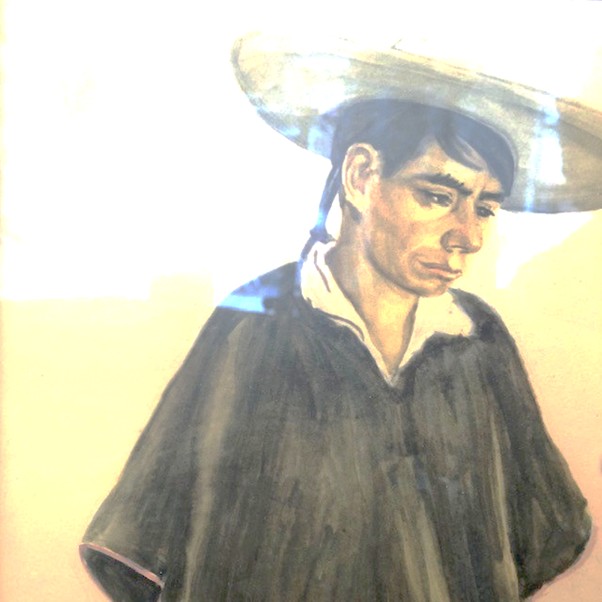
It also refers to a painting of a sad man in a sombrero and poncho, of which McCormack kindly sent us a picture as a reference. In the letter, the letter-writer ponders who this man could be, but does not take the painting home with her. These fragments paint distinct and interesting pictures for the reader, ones which each interconnect but also stand on their own.
The final section ruminates on love, and whether it can be considered ‘the answer’. Although McCormack seems uncertain about this, she sends love with the letter anyway.
We started the volume with this letter because it immediately calls into question what a letter can be. It is purposefully disjointed in its form; it is very aware of its place as a letter; it is steeped in uncertainty, but still, it sends its love. It felt like a very clear example of what this volume is about, and the questions we are looking at, but maybe not seeking to answer.
The second letter of Volume 6, Jason Low’s letter between siblings, centres around family conflict, tension, and parent-child relationships. It resonated with us because like McCormack’s letter it looks at art and the interpretation of art, focusing in detail on Claude Lorrain’s ‘Landscape with Ascanius Shooting the Stag of Sylvia’, and different perceptions of the painting by a mother and son.
This is much more of a traditionally structured letter; contrasting the first in the volume, it has a clear narrative with beginning, middle, and end. However, it still touches on what it means to write a letter. In the letter, the letter-writer admits to tearing up the postcard his mother asks him to post (the torn remnants of which we recreated in the volume). This brings into question the theme of what it means to write a letter that is never read, or even sent.
Throughout the letter, there is a focus on change, or the possibility of it, with the writer looking at the changes occurring in his mother and comparing this with his own inability to change. It ends on this uncertain note, reflecting upon whether or not change is possible for the writer of the letter.
Both of these letters touch on compelling topics and play with the form and the concept of a letter. They introduce readers to what this volume is interested in exploring, and connect to each other through themes of art, change, interpretation, and letter-writing itself.
Volume 6 of The Letters Page is out now, and available to purchase here. We hope you enjoy the letters we have collated, and are able to find even more connections and themes between them.
The Letters Page will be closed for submissions until late 2027, and won’t be in the office. But if you write to us your letters will certainly be kept safe and find their way to us eventually. It would, as always, be great to hear from you.
The Letters Page, School of English, University of Nottingham, NG7 2RD, UK
 theletters.page
One thought