Human Connection in the Pilgrimage Genre
By Inakshi Bagga
Edited by Annabel Wearring-Smith
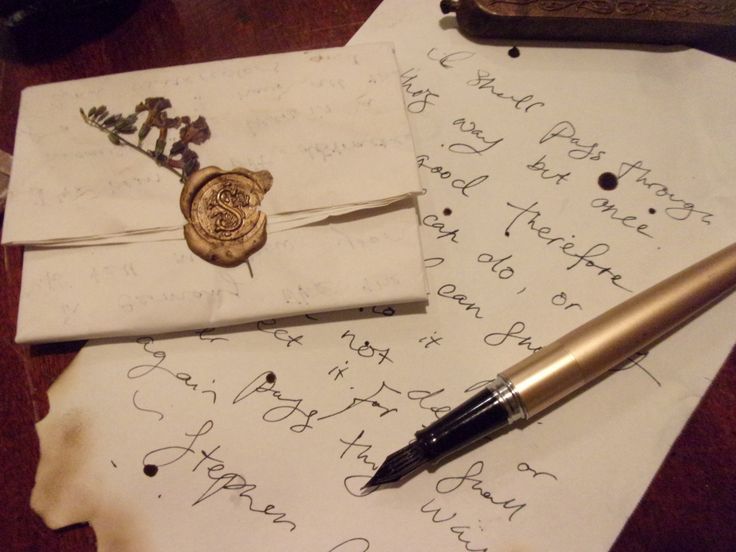
The latest letter to feature in The Letters Page is by Catharina Van Bohemen, who writes a deeply reflective letter to her granddaughter attempting to comfort her in the face of the loss of her best friend.
In her letter Catharina uses the pilgrimage genre as a motif of human interconnectedness, drawing parallels between her walking the Camino de Santiago and her families’ lives to explore what loss and tragedy mean to us. Her letter is a powerful statement on the way that the people we love are permanent fixtures in our life’s journey and will therefore never truly leave us.
Pilgrimage writing is a significant literary genre, spanning across a diverse range of histories religions and cultures. The genre is grounded in inspiration from religious texts, philosophical musings and poetry, where readers are encouraged to look beyond the physical journey of the pilgrim and instead use the spiritual revelations depicted to gain deeper insights into themselves and their faith.
Geoffrey Chaucer’s The Canterbury Tales is one of the most well-known examples of pilgrimage writing. It is a collection of stories from the late-fourteenth century which detail the experiences of a group of pilgrims who are travelling to the shrine of Thomas Becket in Canterbury. There is a beautiful simplicity in the tales, where the narrative intricately depicts characters from all different walks of lives, and yet highlights the way they are all unified by their spiritual journey. Catherina captures this succinctly in her letter, where her narrator recounts the powerful sense of belonging they felt over the course of their pilgrimage. She writes, ‘I met pilgrims from around the world and they all had scallop shells dangling from their packs. They were different sizes, shapes and colours but they all connected us: together and separately, we were all walking in the same direction.’
In fact, my first reading of her letter strongly reminded me of a poem by Sir Walter Raleigh titled The Passionate Man’s Pilgrimage. I find the poem to be unique as a piece of pilgrim writing: the speaker uses pilgrimage as a metaphor rather than having the poem act as a narration of a physical pilgrimage. Like Catharina’s letter, the poem is extremely philosophical in nature. It interweaves the profound message that life is a spiritual journey in which all of our experiences- whether positive or negative- contribute greatly to our individual narratives.
One of the key characteristics of pilgrimage writing is the theme of transformation. In his 1987 novel The Pilgrimage, Brazilian writer Paul Coelho recalls his own pilgrimage to Santiago de Compostela. Over the course of his journey, he grows to appreciate the simplicity of life and the importance of the journey, where he comes to realise that the journey is just as important as the destination: ‘Death is our constant companion, and it is death that gives each person’s life its true meaning.’
Coelho succinctly captures the deeply philosophical nature of pilgrimage writing, where he explores the intersection between the external and internal landscapes of the pilgrimage in order to capture its important spiritual dimensions. Catharina’s letter, too, reflects on her own experiences as she considers ‘we are together even if we are at different points along the way and those points may be joyful, terrible, ordinary, mysterious.’
Catharina’s decision to ground her attempt to comfort her grieving granddaughter within the pilgrimage genre is striking. The metaphor of the pilgrimage becomes a framework for life’s journey and the multitude of experiences and emotions that it consists of. Her comparison of life to a pilgrimage ultimately invites us to reflect on the universal aspects of the human condition and the way we are united under shared experiences of loss and love.
If you would like to read this letter, send us a letter of your own to receive a copy of Van Bohemen’s in the post. If you’ve already written to us, an aerogramme will be in your post-boxes in the near future.
The Letters Page team are back in the office, and ready to read your real letters again. We publish stories, essays, poems, memoir, reportage, criticism, recipes, travelogue, and any hybrid forms, so long as they come to us in the form of a letter. We are looking for writers of all nationalities and ages, both established and emerging.
Your letter must be sent in the post, to :
The Letters Page, School of English, University of Nottingham, NG7 2RD, UK.
See our submissions page for more information.
To stay up to date on The Letters Page newsletter publication, subscribe here.
 theletters.page