‘Letters from friends are like watercolors’: An Interview with Nay Saysourinho
By Maria Rocha
Edited by Naomi Adam
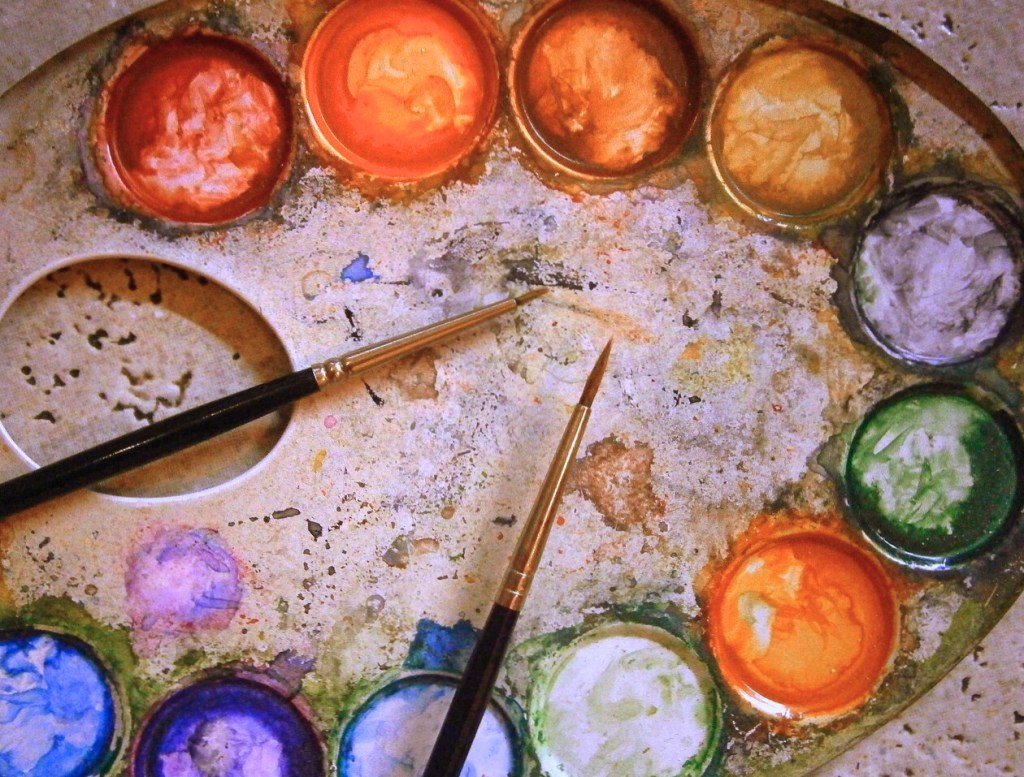
‘When I think of letters I receive, the first thing that comes to mind are letters of rejection. They’re so much easier to remember, because they’re repetitive and generic and they hurt every time, whereas letters from friends are like watercolors, and the meaning of them changes depending on when I re-read them.’
These evocative words by our latest published letter-writer, Nay Saysourinho, lingered with me long after I read her responses to the interview questions I sent via email. The Letters Page team recently selected Nay’s letter, in which she explores her collection of stamps, as the first aerogramme in Volume 8 of the journal. This marks the continuation of a creative relationship with Nay that began over three years ago when another of her letters was featured in Volume 5. In our most recent Outlook-mediated conversation, we discussed everything from her stamp collection to her letter-writing process and her inability to ‘function without writing’.
Nay’s submission for our current volume centres around her favourite stamps, with each small design serving as a reminder of how easily artistic beauty can go unnoticed. Like many hobbies, Nay’s interest in visual art-themed stamps flourished during the pandemic, beginning as an accompaniment to her correspondence with penpals. Soon, when she had gathered a small collection, she was faced with the question of what to do with them.
‘I debated whether to preserve them in an album or to get them framed (especially the ones that were harder to find) but decided that letting go of them was a more interesting course of action. I get attached to objects I find beautiful, and I don’t part with them easily, so sending small articles of beauty away is a way to test myself – test my ability to leave things behind, even if it’s in minuscule ways.’
The ‘small articles of beauty’ that Nay so graciously shared with us in her letter were impactful in more ways than one. Their designs, their backstories, and their effects all point to the power of art, no matter the size or format. When I asked what artwork Nay would add to a stamp of her own design, she responded with an answer which blended wit with sombre reflection.
‘Part of me wants something outrageous, like an impossibly confusing line of poetry, or a thinly-veiled criticism of Henry Kissinger condensed in a Basquiat-like scribble. The other part of me wishes to see an open acknowledgement of the Secret War that was waged in Laos by the American government between 1963 and 1974. A stamp that says: “yes, we held covert operations in a neutral country, here’s your electrical bill”.’
This response is a sobering reminder of how often historical truths are not publicly acknowledged, with Nay’s musings signalling the potential of even the smallest canvases to carry emotional and political weight. As explored in our previous feature article, stamps are so often overlooked, and yet they can serve as windows into history. The concept of small items carrying immense weight re-emerged when I asked Nay whether she has ever received a letter that stands out as particularly meaningful to her.
‘It’s funny: when I think of letters I receive, the first thing that comes to mind are letters of rejection. They’re so much easier to remember, because they’re repetitive and generic and they hurt every time, whereas letters from friends are like watercolors, and the meaning of them changes depending on when I re-read them.’
She admits that it is ‘difficult’ for her to spotlight a single letter as especially significant, ‘because they summon different hues at different times. I can close my eyes and know exactly what colors each letter emits in a painting of them.’
This imagery I found particularly powerful. It captures perfectly how life is rarely black-and-white, but instead layered like paint on a canvas; it is shifting and messy, but it is still beautiful. The metaphor also underscores that each letter we write and send is a letter which another will receive, and (re)interpret in their own unique way. When it comes to her own letter writing process, Nay claims to never remember what she writes in letters – and that, if she could, she would regret all of it.
‘It’s usually clumsy, and confessional – sometimes awkward and performative when the literary speedbumps over the sense of self, or vice-versa. It’s always earnest though. I always wear my heart on my sleeve. And I often end up rambling about love because love baffles me constantly. I cannot grasp the mechanics of it, even now. But I also think it is necessary to reserve a space in our lives where we blush about the things we write.’
There is indeed a certain vulnerability that we must embrace when writing letters, which for Nay extends to her reflections on creativity itself. In her published letter, Nay wrote to ‘never quit your dreams’, which made me curious as to what keeps her motivated. Responding to my queries, she shared an amusing personal anecdote:
‘This summer, I took my children to see a sword-swallowing act at the Renaissance Faire. As the man prepared to impale his organs with a medieval weapon, he quipped “follow your dreams, kids!” with the same self-deprecation I think every artist feels at some point towards their work. The world might go to hell, but here we are, honing our craft even though we know it probably won’t pay rent and it certainly won’t save the planet.’
‘And yet, my favorite artwork are cave paintings because amidst the survival, amidst the necessity to share information, some human beings decided they would practice drawing aurochs and horses so that the images on the walls would look a certain way by the light of the fire.’

For Nay, it seems, creativity is not so much a choice as it is a necessity. ‘It’s not that I stay motivated,’ she says, ‘it’s that I cannot function without writing. And then it becomes a matter of, “how far can I take this? Let’s find out” and that’s probably the closest thing to motivation I have.’
In her letter, Nay closes by considering how she would like to be viewed in hindsight. When I press her on this, Nay expresses her desire to leave behind words that linger:
‘I enjoy the idea of haunting the English language. To have a sentence connect with people so much that they start using it colloquially. When I was younger, I really wanted people to remember my name, mostly because everyone mispronounced it and there was a real desire to be seen.’
‘Now this desire has grown more diffuse. I have had to attend three funerals in the last thirty days. I have said goodbye thrice more than I ever wish to say goodbye. Details fade, but truth has a way of lingering, and I hope my words feel true to someone long after I’m gone, even if they can’t remember my name, or can’t pronounce it.’
Ultimately, here Nay reminds us that even the smallest gestures may ripple outwards and leave lasting impressions – a principle that also informs her latest stamp-punctuated letter. She makes it clear that even something as small as a stamp can hold stories and emotions that resonate far beyond its size.
We publish stories, essays, poems, memoir, reportage, criticism, recipes, travelogue, and any hybrid forms, so long as they come to us in the form of a letter. We are looking for writers of all nationalities and ages, both established and emerging.
Your letter must be sent in the post, to:
The Letters Page, School of English, University of Nottingham, NG7 2RD, UK
 theletters.page