‘That bit of space to think and drift off’: An Interview with Nicola Varley
By Maria Rocha
Edited by Amy Plant & Naomi Adam
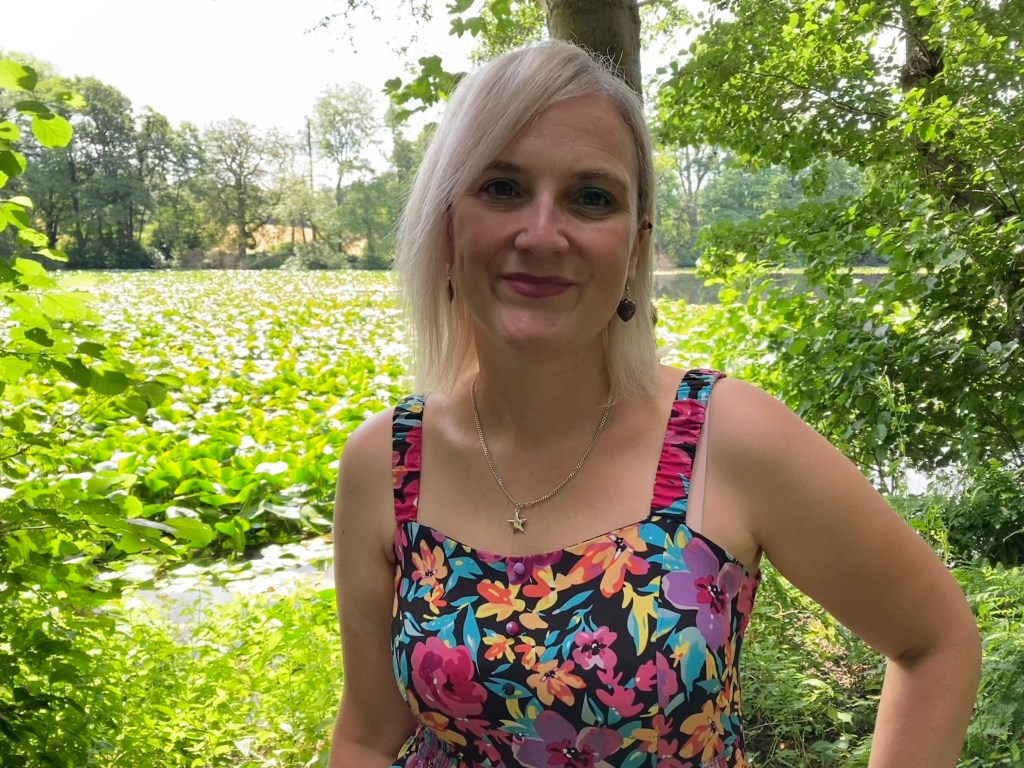
‘My writing often starts with a little bit of something that’s happened, a little inkling of something from my life – but then it’ll go off in a different place. It’s difficult for me to explain that process as I’m not entirely sure what it is.’
The latest volume of The Letters Page features a letter from Nicola Varley in which the sea is a recurring motif – waves lapping against the beach, pebbles being dragged back by the water, and the changes of the coastline. Through this she meditates quietly on the themes of memory and motherhood, which spills over into our conversation via a virtual call.
When I asked how writing letters differs from writing short stories, Nicola laughed: ‘I’m not sure I have a process; that might be the only letter I’ve written in years!’ Despite her light-hearted response, Nicola’s letter evidently carries the weight of careful thought and reflection. ‘With the letter, I was just following a train of thought,’ she says. This contrasts with the more structured approach she takes with short stories, where characters and narrative arcs are more of a central focus.
The setting of Nicola’s letter, Sheringham Beach, holds a particular resonance to her. Though she insists that ‘there are prettier beaches in Norfolk,’ its pebbly, familiar stretch offers something of continuity to her. ‘I used to go there as a child,’ she says. ‘It’s a place I return to when I want space to think and drift.’ In fact, nature in general is often a subtle collaborator in her writing process: ‘There’s something about being by the sea, being in the outdoors that I find inspiring – just having that bit of space to think and drift off and daydream.’ Many of her stories begin as seemingly insignificant moments in such places. A natural history museum visit with her children became ‘The Bone Room’, while a fleeting encounter with a barn owl inspired ‘Leverets in Spring’. ‘I’ll often have a notebook with me,’ she says. ‘The stories usually start with little snippets of things that I come back to.’
For Nicola, writing is something she has always done – she started scribbling stories when she was a little girl. It took the structure of an Open University degree in English Literature and Creative Writing, though, to push her toward taking her work even more seriously. ‘It gave me the confidence,’ she says. ‘To realise that the first time I write something, it doesn’t have to be perfect. That I can actually go back and change things – that’s all part of it.’ Though writing is often a solitary act, her experience at university reminded her of the strength of a writing community. ‘Having feedback from my tutors and other students was really helpful and important. It gave me a bit of confidence to carry on and start to send some work out to places.’
As Nicola’s lived experience shapes the direction of her writing, one prominent theme that echoes through both her letter to us and her fiction is motherhood. Her two sons, now teenagers, may not rush to read her stories (her youngest once ran one through ChatGPT to get a summary), but they certainly affect the way Nicola writes and thinks. ‘Motherhood inevitably feeds into my writing. Probably in ways I don’t always realise.’
One space where Nicola’s roles as writer and individual come together is her garden shed, which acts as her modest personal sanctuary. ‘It’s very cobbled together,’ she smiles. ‘My desk is made out of a bit of decking wood. I’ve got loads of pictures on the walls… birthday cards, inspirational quotes, cat pictures, fake plants! It just feels calm and serene and it is actually my space.’ As spring returns in the Northern hemisphere, so too does her time in that space, and she notes that ‘we’re getting back into shed season, now there’s more spring light.’
Looking ahead to the future, Nicola has two clear hopes: more writing and more time with the people she loves. ‘And a bit of time on my own, too,’ she adds with a laugh. Her vision of the future is much like her letter – grounded and content, marked by memories. ‘I envision my future self being not massively different than I am now. Just carrying on, doing some writing.’
In an age when writing letters is no longer a necessity but a choice, Nicola Varley’s entry offers a reminder of why we still do it: to connect, to remember, and to pause. As she puts it, ‘I did really enjoy the process of writing the letter. It felt very reflective, “day-dreamy”. Maybe I’ll write more letters.’ From all of us here at The Letters Page, Nicola – we certainly hope you do.
The Letters Page team are back in the office, and ready to read your real letters again. We publish stories, essays, poems, memoir, reportage, criticism, recipes, travelogues, and any hybrid forms, so long as they come to us in the form of a letter. We are looking for writers of all nationalities and ages, both established and emerging.
Your letter must be sent in the post, to:
The Letters Page, School of English, University of Nottingham, NG7 2RD, UK
See our submissions page for more information.
 theletters.page