Mapping the World in a Letter
By Anya Berg
Edited by Naomi Adam
Ahead of the imminent release of The Letters Page Volume 5, members of the web and production teams are taking a closer look at some of the letters that made it to print. Their reflections offer a sneak preview of the pieces included in the new edition and the wide-ranging themes they explore. Today, we turn our attention to Vilnius, where one letter opens onto questions of memory, witness, beauty, and what it means to write from the edge of uncertainty. Originally written in Lithuanian by Marius Borokas, the letter was translated by Rimas Uzgiris.
Every letter ever composed is a palimpsest, complete with layers compiled to mark traces of previous selves and half-erased thoughts. Cities often reveal themselves in the same way.
Marius Burokas’ letter describes what it means to be rooted in a city richly layered with history, uncertainty and beauty. The epistolary form itself serves as a lens for exploring and meditating on place, memory, and meaning. Addressed to a ‘stranger to the city,’ readers are offered an exceptionally vivid portrait of Vilnius, the capital of Lithuania, as a location where history, memory and political unease intersect. Moving between the city’s physical landscape and emotional terrain, carved by the shadow of war, Vilnius has, in a sense, been superimposed – from buried ruins to rituals, exposing the traces of lives erased and remembered – just as letter-writing leads to a similar accumulation of remnants of correspondence and unspoken fragments.
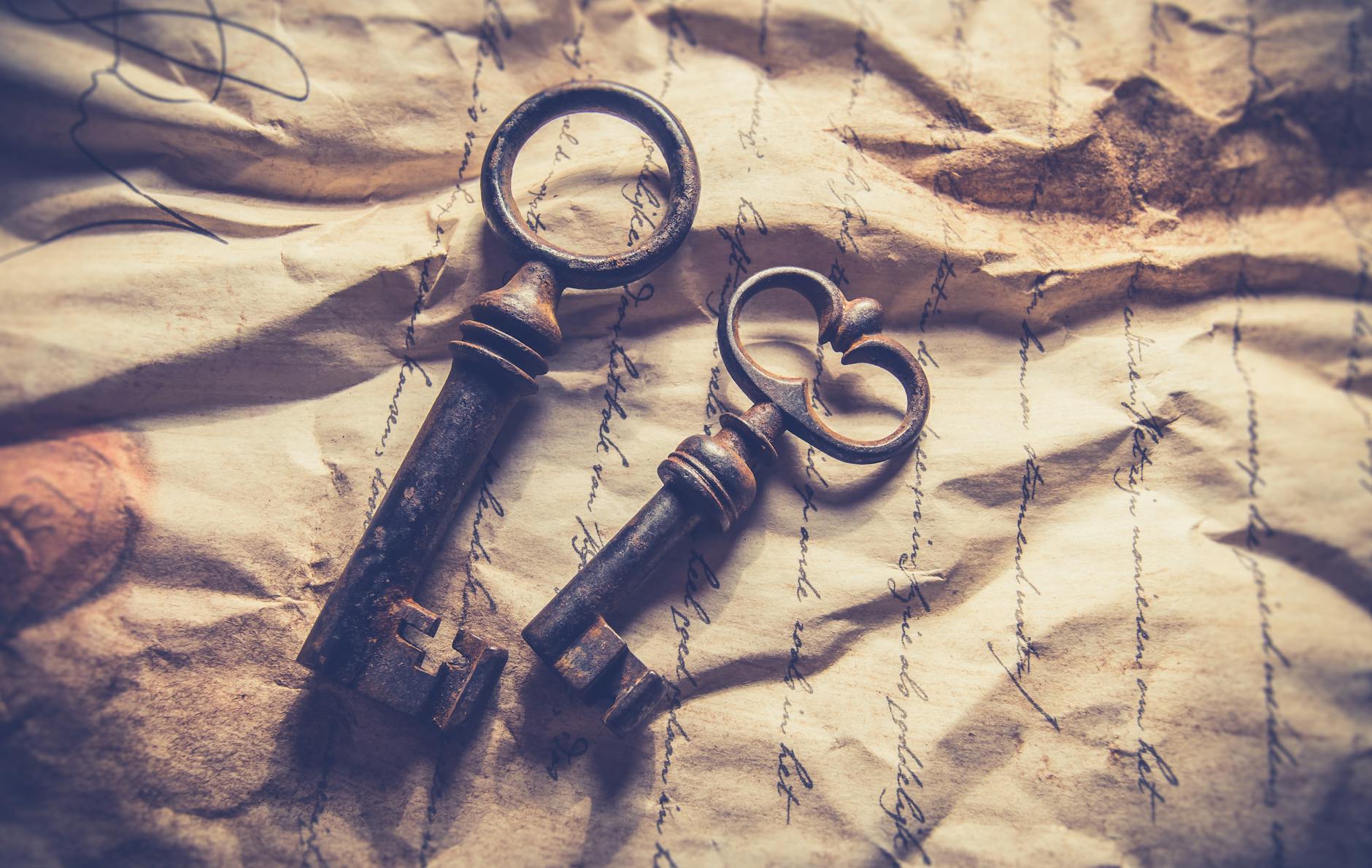
Letters are more than communication; they are a window into clarity, a form of organising time and a way of making sense of a place.
Within each correspondence, there’s an unacknowledged tension, riddled with dichotomies: presence and absence, intimacy and distance and permanence and incompleteness.
Because letters are written across distance and uncertainty, they have long served as intimate acts of witness, carrying personal testimony into public history. They preserve versions of the self that no longer exist; synonymous with the intangible dynamic nature of humanity, letters function as a physical representation of our being in flux, documenting the continuously changing identity across a living archive.
In his letter, Marius notes:
I believe in the power of words. I have little else to believe in.
Writing is transformative; it is a quiet form of testimony – to war, to memory, to the layered histories of a city. It can serve as a statement about the way public affairs, such as war, permeate everyday life.
Letter-writing is itself a form of translation, a daily act of carrying inner experience across the fragile bridge between self and other.
Living between languages imposes a sense of multiple selves – identity is dynamic rather than fixed. Translation is not just about technicalities and a physical process; it encompasses emotional, cultural and psychological negotiations. By partaking in it, one must accept that nothing ever moves across intact and unchanged – there is always something lost, or reformed. Human identity mirrors this process: each person is constantly translating inner personal experiences into social language – adapting and changing to present what is considered appropriate; a form of censorship of who we are, if you will. (For a deeper exploration of the contradictions inherent in correspondence, you can see our recent article, Yours, In Fragments.)
The modern world increasingly coerces people into translated lives (consider migration, digital communication, cultural hybridity). A slow process of personal transformation, contrasting with the immediacy of the past – such as the urgency of war and political instability – can be our response. Humans are vulnerable, and letters allow us to make sense of our fragility through permanence. Translation becomes a way of surviving contradiction – to grasp multiple realities and versions of ourselves without resolving them. In this same way, Vilnius is not just a city lived in; it is mediated and interpreted daily. One can never know how or where words will land… but we send them anyway. Trust becomes the core of translation and communication.
The epistolary form is capable of holding contradiction, allowing beauty and ruin to coexist in the same emotional space; the two notions are not mutually exclusive. Human environments often contain dichotomies of beauty and terror or sanctuary and threat. Each notion inhabits the same space, without cancelling each other out; however, they rarely resolve into one emotion. A single letter has the ability to contain hope and despair or attachment and detachment, all simultaneously. They are more comprehensible through their lack of need to demand emotional consistency, mirroring the way human feelings actually work. These layers of contradiction function in the same way as a city, history written over and over, yet that doesn’t mean erasure either.
Cities, too, accumulate architectural beauty and political trauma, allowing the writer (and reader) to move fluidly between observation, fear, memory, and wonder without a formal transition, thereby fostering a desire for synthesis. Beauty does not erase ruin in a letter but instead sits beside it – sometimes it becomes even sharper because of it. Contradiction is not an error but rather a reflection of lived experience.
To read a letter is to acknowledge another way of seeing, to read the world.
Cities, like letters, are layered; they’re contradictory and defined by presence and absence working simultaneously. Marius’ Vilnius-inspired letter serves as a reminder that both cities and the self remain open – they’re unfixed and contain the ability to be superimposed, but yet never erased. They are shaped by memory, correspondence, and the desire to be understood: a map of history.
Ready to write to the world? The Letters Page team are back in the office, and ready to read your real letters again. We publish stories, essays, poems, memoir, reportage, criticism, recipes, travelogues, and any hybrid forms, so long as they come to us in the form of a letter. We are looking for writers of all nationalities and ages, both established and emerging.
Your letter must be sent in the post, to:
The Letters Page, School of English, University of Nottingham, NG7 2RD, UK
See our submissions page for more information.
 theletters.page