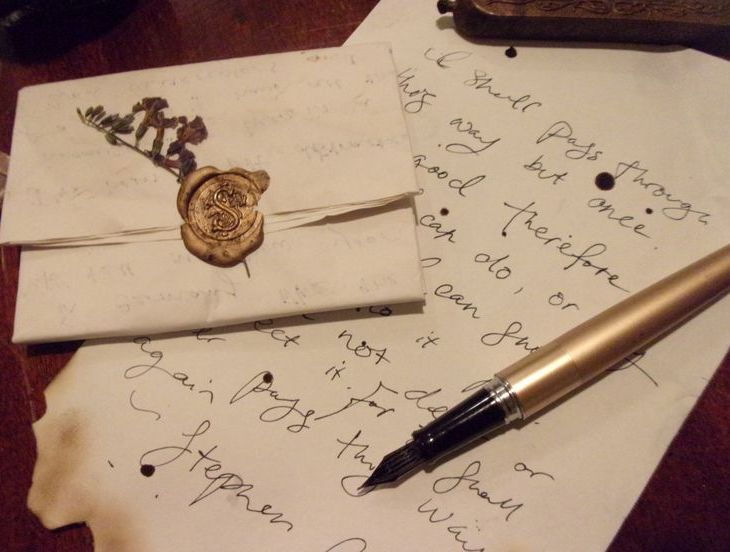
‘A text, you just fire off. A letter is quiet and slow’: An Interview with Catharina Van Bohemen 

‘When you write a letter, you think about it. A text, you just fire off. A letter is quiet and slow.’ The submission chosen by The Letters Page for the upcoming volume is a letter Catharina van Bohemen wrote to her fifteen-year-old granddaughter, who recently lost her best friend. I interviewed Catharina and discussed her account of walking the Camino de Santiago and its ongoing resonances, even though she walked it many years ago. We talked about coping with grief, mortality, creating connections with unfamiliar people, the invisible force of destiny, and a myriad of other topics.

Human Connection in the Pilgrimage Genre

The latest letter to feature in The Letters Page is by Catharina Van Bohemen, who writes a deeply reflective letter to her granddaughter attempting to comfort her in the face of the loss of her best friend.  

In her letter Catharina uses the pilgrimage genre as a motif of human interconnectedness, drawing parallels between her walking the Camino de Santiago and her families’ lives to explore what loss and tragedy mean to us. Her letter is a powerful statement on the way that the people we love are permanent fixtures in our life’s journey and will therefore never truly leave us.

‘The Letters Page informs how I go about my day-to-day work’: A Conversation with Harriet Dunlea, Head of Books at Carver PR 

When Harriet outlined the stepping stones of her early publishing career, she described its trajectory as ‘very much Letters Page, internship, assistant role’. 

All Zoom meetings start with a slight pause as the microphone connects, and a relief when you can see each other on-screen and hear each other clearly. This was the only pause in my conversation with Harriet Dunlea, as we talked about university, The Letters Page and all things publishing. 

Harriet worked as a student on The Letters Page in 2015, and is now Head of Books at Carver PR. She remembers learning about The Letters Page in a lecture and ‘feeling really, really happy when I got it because it was tangible experience that I get to do in Nottingham, where there aren’t that many opportunities to do publishing work experience.’
Overland: ‘Culture Shaken and Stirred’

This time around we’ve chosen Overland – Australia’s only radical literary magazine – as our journal of the month.  

Overland is a publication that dates all the way back to 1954. In its very first edition, Stephen Murray-Smith set out the magazine’s aims to ‘publish poetry and short stories, articles and criticism by new and established writers. It will aim high… [but] will make a special point of developing writing talent in people of diverse backgrounds. We ask of our readers, however inexpert, that they write for us; that they share our love of living, our optimism, our belief in the traditional dream of a better Australia.’

Love Letters and Disillusionment: Moral Ambiguity in Romance Writing

When hearts are entangled, grand romantic gestures speak much louder than words. Words often falter amidst the sea of emotions far too grand to be expressed by the constraints of time and voice. The embrace of love letters in a relationship emerges as a warm envelope for the reader, surpassing the spaces between hearts, minds, voices and words. Expressing love through a letter echoes a sense of intimacy and a timeless quality that cannot be found in spoken words or fleeting gestures. The palpable permanence of a letter that you can fold up and carry in your wallet everywhere you go is an everlasting memento. But what happens when those words are weaponized for a selfish act of closure?  

‘The author of the letter is very much in charge of the narrative’: An Interview with Ali Rowland  

The latest submission to be published in The Letter’s Page is a deliberately shocking letter by writer and poet Ali Rowland, as a manipulative ex tries to control the narrative of a past relationship. Last week, I sat down with Ali to discuss the inspiration behind her piece and what she thought about writing in the often-forgotten form of the letter. Our discussion was incredibly insightful, and we enjoyed discussing a range of topics, including mental health, communication and the human experience.