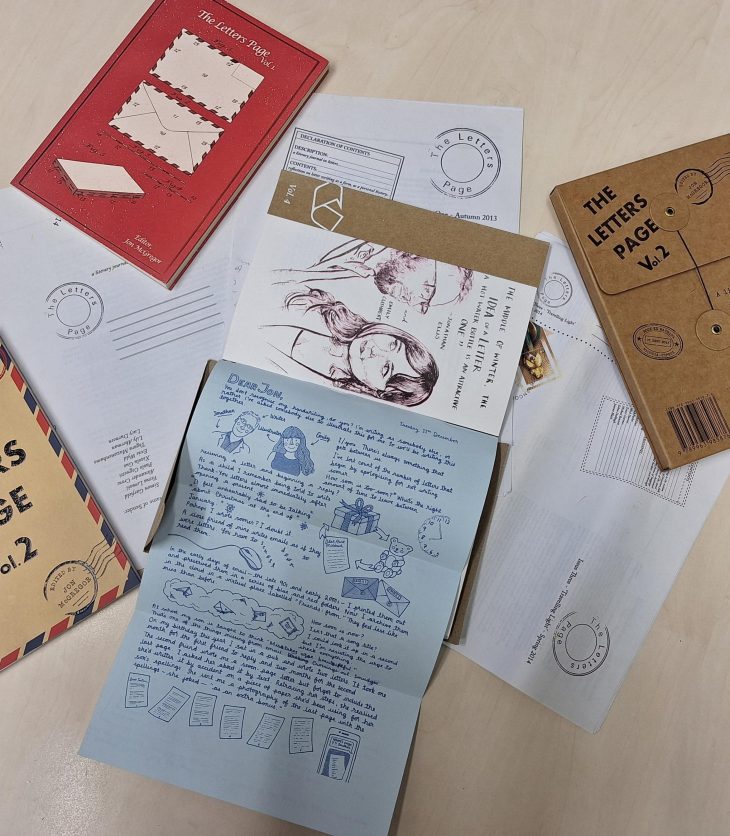
Laura and Irene both speak of their personal relationship with letter writing. Laura is apt to send letters to whoever on her Facebook friends list wants one, while Irene sends long digital letters in the form of emails to a friend in New York. In a beautiful analogy, Laura then compares letter writing to kintsugi.
Category: Uncategorized
Cities, like letters, are layered; they’re contradictory and defined by presence and absence working simultaneously. Marius Burokas’ Vilnius-inspired letter serves as a reminder that both cities and the self remain open – they’re unfixed and contain the ability to be superimposed, but yet never erased.
The myth of Robin Hood has travelled far beyond its own home forest. Outside Prague’s main train station lies Vrchlického Sady, known by locals as Sherwood. This urban park doesn’t hold the legendary history of heroism that permeates Nottingham’s popular forest, but rather incorporates through literature the darker aspects of Prague’s culture.
In this day and age, writing morally calls for recognising that every sentence is written inside a burning house. To write anyway is not an act of purity but an act of responsibility. It is not putting out the fire, but bearing witness to its heat, its smoke, and the people trapped inside.
Today, we discuss pseudonyms, the forces that shape our reading habits, the debate over separating art from artist, and the Ukrainian letter-writer who believes that ‘some nations, if they read more books from other nations, would feel less inclined to attack their neighbours with rockets.’
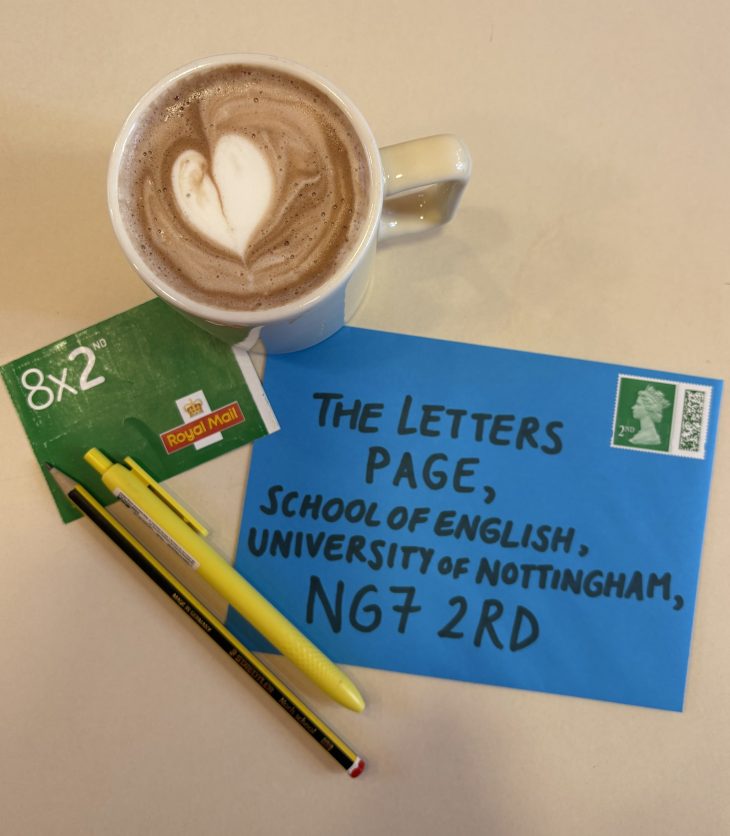
There is, in Jon’s words, ‘a weird tension’ between The Letters Page’s insistence on physical submissions and its simultaneous reliance on digital media. The journal mandates that submissions are sent via post and yet Jon admits that the journal ‘wouldn’t exist’ without the digital tools which are vital for its production.
Sitting down with Jon, are intrigued to learn what drew him to the epistolary theme in the first place. ‘It’s not so much that letters are important, as interesting. There’s more information in a letter that comes in the post – it’s an object that’s moved through space to get to you.’
What began as an unsuspecting blog page, advertising itself as ‘the letters page for a journal that doesn’t yet exist‘, soon morphed into a professionally produced journal of which every page was a letters page.
To trace the origins of letters is to trace humanity’s evolution, from necessity to narrative, from survival to expression. Letters serve as proof that human culture hinges on exchanged words between people and the faith that understanding can cross time – something illuminated by the upcoming print issue of The Letters Page.
‘The natural beauty of British coastlines has long inspired writers to pick up their pens’, writes The Letters Page’s Amy Plant as she discovers the surprising links between a Virginia Woolf classic and our latest published letter.