Laura and Irene both speak of their personal relationship with letter writing. Laura is apt to send letters to whoever on her Facebook friends list wants one, while Irene sends long digital letters in the form of emails to a friend in New York. In a beautiful analogy, Laura then compares letter writing to kintsugi.
Tag: letter writing
The myth of Robin Hood has travelled far beyond its own home forest. Outside Prague’s main train station lies Vrchlického Sady, known by locals as Sherwood. This urban park doesn’t hold the legendary history of heroism that permeates Nottingham’s popular forest, but rather incorporates through literature the darker aspects of Prague’s culture.
In this day and age, writing morally calls for recognising that every sentence is written inside a burning house. To write anyway is not an act of purity but an act of responsibility. It is not putting out the fire, but bearing witness to its heat, its smoke, and the people trapped inside.
Sitting down with Jon, are intrigued to learn what drew him to the epistolary theme in the first place. ‘It’s not so much that letters are important, as interesting. There’s more information in a letter that comes in the post – it’s an object that’s moved through space to get to you.’
The more letters we write, the more moments we capture, and the more fragments we preserve, the closer letters come to revealing our complete identity. Letters become our own personal archives, splintered across time and space. Here, I leave you with a splinter of me.
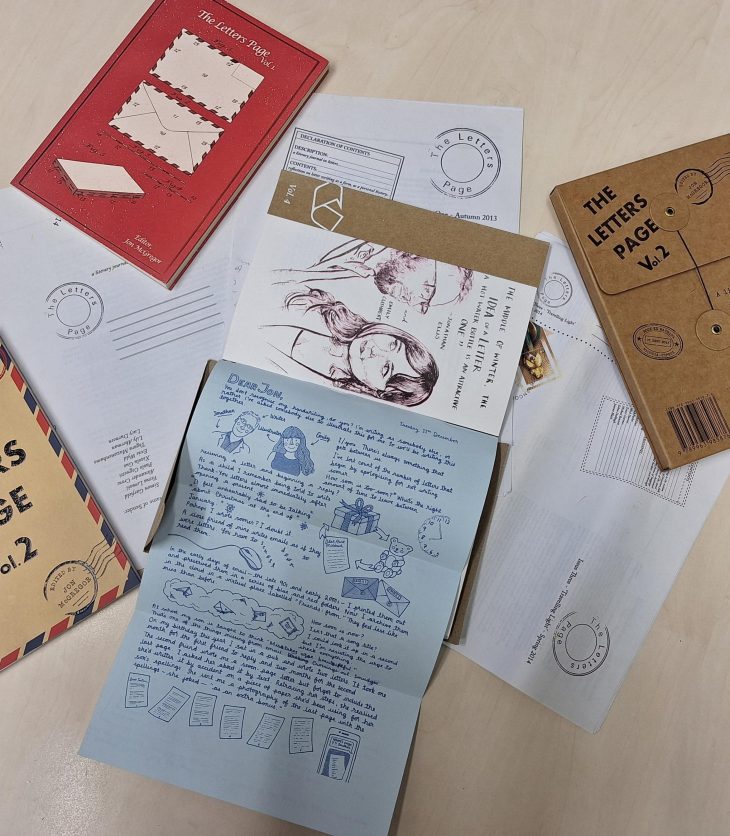
What began as an unsuspecting blog page, advertising itself as ‘the letters page for a journal that doesn’t yet exist‘, soon morphed into a professionally produced journal of which every page was a letters page.
The return to ‘shed season’ provides our latest contributor, Nicola Varley, with ‘that bit of space to think and drift off and daydream’, discovers the The Letter Page’s Maria Rocha, as she sits down with Nicola to discuss the creative process, her hopes for the future… and cat pictures.
Alan Cleaver’s latest book Postal Paths reads like a heartfelt letter to a world that is quietly slipping away: the tactile world of envelopes, stamps, and the steady steps of our rural ‘posties’, writes The Letter Page’s Maria Rocha.
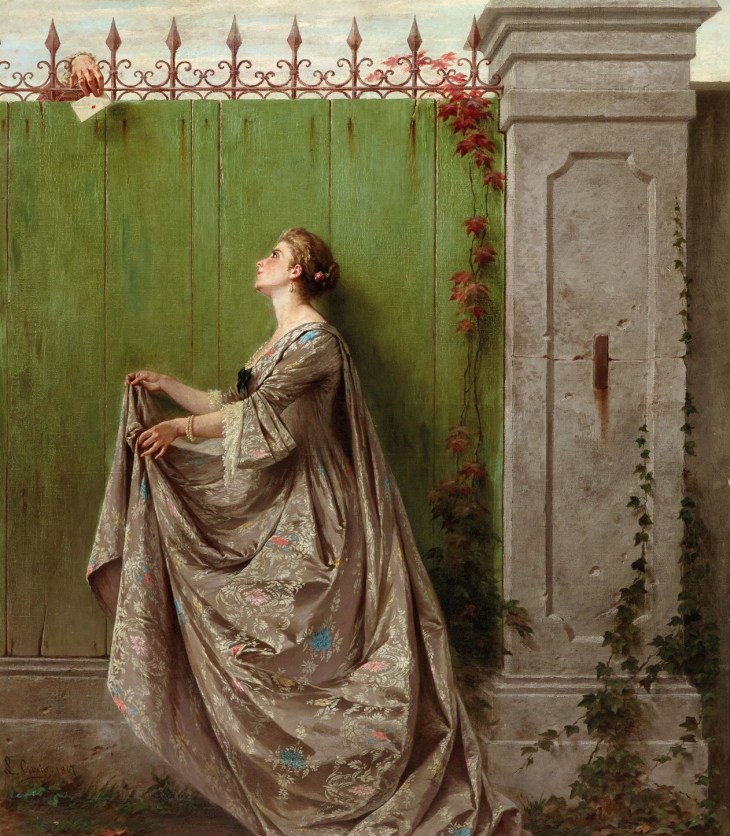
Clive Cass’s letter to us reveals that writing is a deeply personal and artistic act. Here, Maria Rocha reflects on historical artistic depictions of letter writing, showcasing an evolution from divine to domestic themes, and emphasising the emotional power and creativity inherent in letters, even in today’s digital age.
Picture this. A flat in Tokyo, situated ten minutes from the city centre, inhabited by a teacher or a marketing executive. Now imagine them sitting in an open window reading your letter, the one you once posted to us. Or what about someone reading it from an office in Germany, or onboard a train in London.